
Choosing the best roofing materials for California homes in 2026 sounds simple until you actually start researching. There are dozens of options out there and every manufacturer claims their product is the best. But if you own a home in California, the choice is more specific than just picking whatever is cheapest or most popular nationally.
California has its own personality when it comes to weather. Inland areas like Riverside and the San Fernando Valley bake under intense summer heat. Coastal neighborhoods deal with salt air and moisture year-round. And hillside communities across Southern and Northern California live with wildfire risk as a real part of everyday life. A roofing material that holds up great in Ohio or Texas might start failing within a decade here.
Here is our honest breakdown of the materials worth considering in 2026.
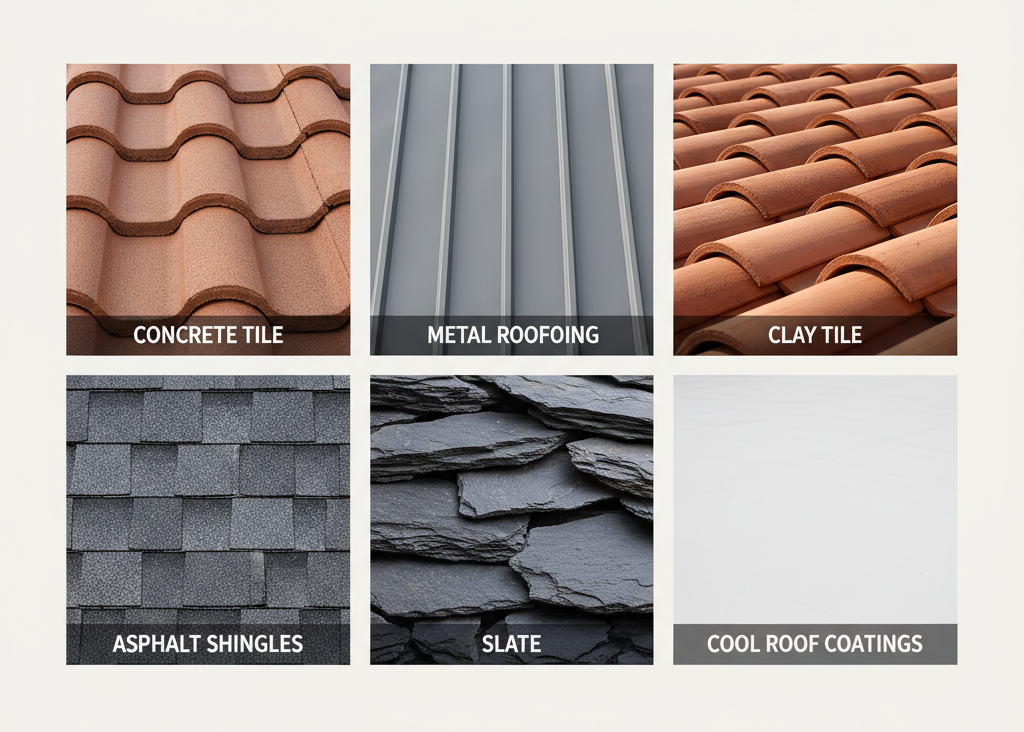
1. Concrete Tile – The Reliable Workhorse
If you drive through most Southern California neighborhoods, you will notice concrete tile everywhere – and there is a solid reason for that. It handles heat well, lasts decades, and when installed correctly it requires very little maintenance.
Why California homeowners choose concrete tile:
- Creates a natural air gap underneath that keeps homes cooler during summer
- Handles temperatures above 100°F consistently without cracking or warping
- Carries a Class A fire rating – essential in California
- Lifespan of 40 to 50 years with basic maintenance
Cost – $10 to $20 per square foot installed
The one downside is weight. Older homes sometimes need structural reinforcement before installation. Always have a licensed roofer assess the structure first.
2. Clay Tile – Built for the California Coast
Clay tile has been part of California architecture since the Spanish colonial era and it has stayed popular for good reason. It handles coastal salt air better than almost any other material, making it a natural fit for homes near the ocean in Malibu, Santa Monica, and Long Beach.
Why coastal California homeowners prefer clay tile:
- Naturally resistant to salt air and coastal humidity
- Class A fire rating – increasingly important as fire seasons grow longer
- Lifespan stretches well past 50 years, often close to a century
- Adds strong curb appeal and resale value to the home
Cost – $15 to $25 per square foot installed
Clay tile costs more upfront than concrete but when you factor in how many times you would replace a cheaper roof over the same period, it often makes better financial sense long term.
3. Metal Roofing – The Smart Choice for Wildfire Zones
Metal roofing has grown significantly across California over the last several years, particularly in areas with elevated wildfire risk. It is also one of the top recommended roofing materials for hot climates like the San Fernando Valley and Riverside where summer temperatures regularly exceed 100°F. The reason is straightforward – metal is completely non-combustible and reflects solar heat instead of absorbing it.
Why wildfire-zone homeowners are switching to metal:
- Non-combustible – the safest option in high fire risk areas
- Many fire safety experts consider metal roofing the best roof for California wildfire zones because it will not ignite from ember showers during fire events.
- Reflects solar heat and can reduce cooling costs noticeably during summer
- Standing seam design means fewer leak points during heavy rain seasons
- Works well in both coastal and inland California climates
Cost – $12 to $22 per square foot installed
Lifespan ranges from 40 to 70 years depending on the metal type and coating used.
4. Asphalt Shingles – When Budget Is the Priority
Asphalt shingles are the most affordable option and a reasonable choice for homeowners in moderate California climates who need a replacement without stretching the budget. They install quickly and architectural grade shingles handle California wind conditions well.
Things to know before choosing asphalt in California:
- Lifespan is shorter here than in cooler states – closer to 20 years due to intense UV exposure
- Architectural grade shingles significantly outperform basic 3-tab in California conditions
- Installation quality matters as much as the shingle itself – underlayment and ventilation are where corners get cut
If you are going the asphalt route in the Los Angeles area, the team at American Roofing CA handles shingle installation with proper attention to ventilation and waterproofing details. Get a free estimate at americanroofingca.store
Cost – $5 to $12 per square foot installed
5. Cool Roof Coatings – Practical for Flat Roofs
Flat roofs are common on apartment buildings, commercial properties, and modern homes across Los Angeles. Cool roof coatings are reflective membranes applied over existing flat roof surfaces to reduce heat absorption.
Key facts about cool roof coatings in California:
- California’s Title 24 energy code, enforced by the California Energy Commission, requires cool roof compliance on many replacement flat roofs.
- Reduces summer cooling costs in a meaningful way
- Does not require a full tear-off – applied over existing surface in most cases
- Requires recoating every 10 to 20 years depending on the product used
Cost – $3 to $7 per square foot applied
6. Slate – For Homeowners Thinking Long Term
Slate is the most durable roofing material available. A properly installed natural slate roof can last 75 to 150 years. It is naturally resistant to heat, moisture, and fire and does not rot or attract insects.
Why slate makes sense as a long-term investment:
- Longest lifespan of any roofing material available
- Completely fireproof – ideal for California’s climate
- Zero maintenance compared to most other materials
- Adds premium value to the property
Cost – $25 to $50 per square foot installed
The cost is significant but for homeowners who plan to stay in their home for decades and never want to think about the roof again, the long-term value often justifies it.
California Roofing Materials 2026 – How to Choose the Right One for Your Home
Understanding the best roofing materials for California conditions comes down to four factors specific to your situation:
- Location – coastal, inland, hillside, and desert zones all have different needs
- Budget – both upfront cost and long-term maintenance cost
- HOA rules – some communities restrict material types and colors
- Wildfire risk – Class A fire ratings are non-negotiable in many California zip codes
What does not change regardless of which material you choose is this – installation quality determines whether a roof actually performs as advertised. The same tile or shingle installed correctly lasts decades. Installed carelessly, it causes problems within a few years. Working with a licensed California contractor like American Roofing CA ensures your material choice matches your specific local climate zone. Before finalizing your material choice, read our complete guide on how to find a trusted roofing contractor in Los Angeles to ensure your installation is done correctly the first time.
If you are based in Los Angeles and ready to move forward, American Roofing CA offers free roof assessments for homeowners across LA County.
Frequently Asked Questions
1. What roofing material handles California heat the best?
Concrete tile, clay tile, and metal roofing all handle California heat well. The air gap in tile roofing and the reflective surface of metal both reduce heat transfer into the home, which helps keep cooling costs down during long summer months.
2. Do I need a Class A fire rating in California?
In most wildfire-adjacent areas of California, Class A is either required by local building code or strongly recommended by insurance providers. Concrete tile, clay tile, metal roofing, and slate all carry Class A ratings. If your home is in a high fire hazard severity zone, this should be your first filter when choosing a material.
3. How does California UV exposure affect roof lifespan?
It shortens it – particularly for asphalt shingles. UV degradation happens faster in California than in northern states. When planning a replacement, budget for a slightly shorter lifespan than the national manufacturer estimates suggest, especially in inland and desert regions.
4. How long does a roof last in california?
It depends on the material. Concrete tile lasts 40 to 50 years, clay tile up to 100 years, metal roofing 40 to 70 years, and asphalt shingles closer to 20 years due to intense UV exposure in California’s climate. Proper installation and ventilation directly affect how close to maximum lifespan your roof reaches.
5. Is cool roof coating required in California?
California’s Title 24 energy code requires cool roof compliance on many new and replacement flat and low-slope roofs. Requirements vary by climate zone and building type. Check with your local building department before starting any flat roof replacement project.
6. What is the most cost-effective roofing material in California long term?
Clay tile and slate have the highest upfront costs but the longest lifespans. When you calculate the total cost over 50 to 100 years including replacements, maintenance, and energy savings, premium materials often outperform cheaper options in the long run – particularly in California’s demanding climate.
Leave a Reply