
If you’ve noticed water stains on your ceiling, curling shingles, or your roofing contractor just handed you a steep estimate, you’re probably wrestling with the same question every Los Angeles homeowner eventually faces – do I repair this or just replace the whole thing?
It’s not a simple answer. The right decision depends on your roof’s age, the extent of the damage, your budget, and frankly, how long you plan to stay in the home. This guide breaks it down honestly so you can make an informed decision without feeling pressured in either direction.
The Core Difference Between Roof Repair and Replacement
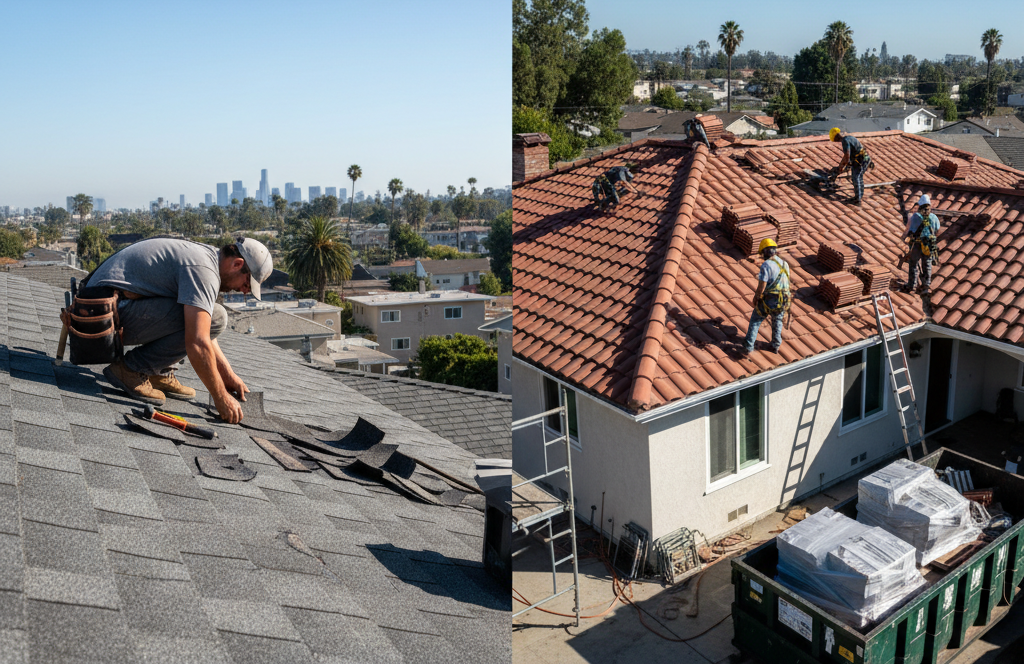
Roof repair targets a specific problem area – a section of damaged shingles, a failing flashing, a localized leak source. It’s surgical. You go in, fix what’s broken, and leave the rest intact.
Roof replacement means stripping the existing roofing material down to the decking and starting fresh with new underlayment, new material, and a new lifespan. It costs significantly more upfront but resets the clock on your roof’s life completely.
Neither option is always right. The goal is matching the solution to the actual problem – and in Los Angeles, that calculation has some specific local factors worth understanding.
Signs You Probably Need a Repair – Not a Full Replacement
Repair is usually the right call when the damage is isolated and your roof still has meaningful life left in it. Look for these indicators:
- Single area leaking after a specific storm event – localized damage from debris or wind is almost always repairable
- Missing or cracked shingles in one section – if the surrounding shingles are in good shape, replacing the affected section is straightforward
- Flashing failure around a chimney, vent, or skylight – flashing repairs are among the most cost-effective fixes available
- Roof is under 15 years old – a relatively young roof with isolated damage is always a repair candidate first
- Damage covers less than 30% of the total roof surface – industry standard guidance puts the repair threshold at roughly one-third of the roof area
- No signs of structural decking damage – if the decking underneath is solid, a surface repair holds well
A licensed roofer should always inspect the decking before confirming a repair is viable. What looks like surface damage from the ground sometimes reveals soft or rotted decking underneath once shingles are pulled.
Signs You Probably Need a Full Replacement
Replacement becomes the more logical investment when repairs would only delay the inevitable. Here are the honest indicators:
- Roof is 20 to 25 years old or older – asphalt shingles in California typically reach end-of-life faster than national averages due to UV intensity. A 22-year-old roof repaired today will need replacement within a few years regardless
- Damage covers more than 30% of the roof – at this point, material and labor costs for repair start approaching replacement territory without giving you the longevity benefit
- Granule loss is widespread – if your gutters are consistently filling with shingle granules, the entire surface is degrading, not just one section
- Multiple leaks in different areas – two or three separate leak points signal systemic failure, not isolated damage
- Sagging sections anywhere on the roof – sagging indicates structural decking or rafter damage that requires full access to address properly. If you are dealing with sudden structural damage or an active leak, read our guide on emergency roof repair in Los Angeles before deciding – emergency situations have different timelines and insurance implications.
- Your insurance adjuster has declared the roof a total loss – after major storm events, insurers sometimes cover full replacement. This is worth understanding before committing to repairs out of pocket
- You’re planning to sell the home – a new roof adds measurable resale value in the Los Angeles market and removes a major inspection flag for buyers
Roof Repair vs Replacement – Cost Comparison for Los Angeles 2026
Los Angeles sits at the higher end of national roofing costs due to labor rates, permitting requirements, and material transportation. Here’s a realistic breakdown:
| Service | Estimated Cost Range LA |
|---|---|
| Minor repair (single section) | $350 – $900 |
| Flashing repair | $300 – $750 |
| Moderate repair (multiple areas) | $900 – $2,500 |
| Partial re-roof (under 50%) | $3,500 – $7,000 |
| Full replacement – asphalt shingles | $9,000 – $18,000 |
| Full replacement – tile or metal | $16,000 – $35,000+ |
These ranges reflect typical costs in LA County for licensed, insured contractors pulling the required permits. Significantly lower quotes often indicate unlicensed work, unpermitted installation, or shortcuts on underlayment – all of which create liability issues if you sell or file an insurance claim later.
According to the California Department of Consumer Affairs, all roofing contractors in California are required to hold a valid C-39 Roofing Contractor license. Always verify license status at cslb.ca.gov before signing any contract.
The 50% Rule – A Simple Framework for LA Homeowners
When you’re genuinely unsure which direction to go, the 50% rule gives you a practical starting point.
If the cost of repairing your roof exceeds 50% of the cost of a full replacement, replacing the entire roof usually makes better financial sense. You spend more now but get a full warranty, a full lifespan, and eliminate the risk of returning repair costs within the next few years.
For example, if a full replacement on your home would cost $14,000 and your contractor quotes $8,000 for extensive repairs, the repair is already at 57% of replacement cost – with no guarantee you won’t face additional repairs within 3 to 5 years. That’s a strong case for replacement.
This rule is a guideline, not a formula. Your roof’s age, material type, and insurance situation all affect the math. But it’s a useful sanity check when repair estimates start climbing.
California-Specific Factors That Affect the Decision
Los Angeles roofing decisions involve some considerations that don’t apply in other states:
- Title 24 compliance – California’s energy code requires cool roof compliance on many replacement projects. If you’re replacing, your contractor needs to factor this into material selection
- Fire ratings – homes in high fire hazard severity zones (much of the LA hillside and foothill areas) require Class A fire-rated materials. A repair using non-compliant materials on a compliant roof can create insurance and resale issues
- Permit requirements – Los Angeles requires permits for full replacements and for repairs exceeding a certain scope. Unpermitted roofing work appears on title reports and can complicate home sales
- HOA restrictions – many LA communities restrict roofing materials and colors. Verify compliance before choosing replacement materials
For a detailed look at what roof repairs typically cost across different LA neighborhoods and what to watch for when hiring, our guide on roof repair costs in Los Angeles covers the full breakdown.
Questions to Ask Your Roofing Contractor Before Deciding
A good contractor should be able to answer all of these without hesitation:
- How old is my current roof and what is the expected remaining lifespan?
- Is the decking intact or are there areas of soft or rotted wood?
- What percentage of the roof surface is affected?
- Will a repair come with a workmanship warranty, and for how long?
- Is this damage likely covered under my homeowner’s insurance?
- Do you pull permits for this type of work in LA County?
- Are you licensed under C-39 with the CSLB?
If a contractor discourages you from filing an insurance claim, rushes you toward a decision, or refuses to provide a written estimate before starting work – walk away.
One LA-area contractor that provides written estimates, pulls required permits, and carries full C-39 licensing is American Roofing CA – they offer free assessments for homeowners across Los Angeles County who are unsure whether repair or replacement is the right call.
Making the Final Decision – A Simple Checklist
Before calling your contractor, run through this checklist:
Lean toward REPAIR if:
- Roof is under 15 years old
- Damage is isolated to one area
- No decking damage present
- Repair cost is under 40% of replacement cost
- You plan to sell within 2 to 3 years and want to pass inspection
Lean toward REPLACEMENT if:
- Roof is 20+ years old
- Multiple leak points exist
- Granule loss is widespread
- Repair quote exceeds 50% of replacement cost
- You plan to stay in the home long term
- Insurance is covering it after storm damage
Frequently Asked Questions – Roof Repair vs Replacement Los Angeles
1. How do I know if my roof needs repair or replacement?
The most reliable way is a professional inspection from a licensed C-39 contractor. Key indicators for replacement include age over 20 years, widespread granule loss, multiple leaks, or sagging. Isolated damage on a younger roof almost always points to repair.
2. Does homeowner insurance cover roof replacement in California?
It depends on the cause. Storm damage, falling trees, and fire damage are typically covered. Normal wear and aging is not. Always get a professional damage report before filing – it significantly strengthens your claim. The Insurance Information Institute provides detailed guidance on what to document before contacting your insurer.
3. How long does a roof replacement take in Los Angeles?
Most residential replacements in LA are completed in one to three days depending on roof size, material type, and permitting. Tile roofs take longer due to material handling and weight considerations.
4. Is it worth replacing a roof before selling a home in LA?
In most cases, yes. A new roof removes a major inspection flag, can increase appraised value, and significantly speeds up the sale process. Buyers in the LA market are cautious about aging roofs given California’s climate and fire risk considerations.
5. What is the lifespan of a roof in Los Angeles?
Asphalt shingles last roughly 20 years in LA due to intense UV exposure – shorter than the 25 to 30 year national estimate. Concrete and clay tile last 40 to 50+ years. Metal roofing runs 40 to 70 years. California’s climate accelerates degradation for most materials compared to cooler states.
The repair vs replacement decision comes down to one honest question – are you fixing a problem, or delaying the inevitable? For most Los Angeles homeowners, that answer becomes clear once you know your roof’s age, the scope of the damage, and what a licensed contractor finds when they actually get up there and look. Get the inspection first, get it in writing, and make your decision from facts rather than estimates.
Leave a Reply