
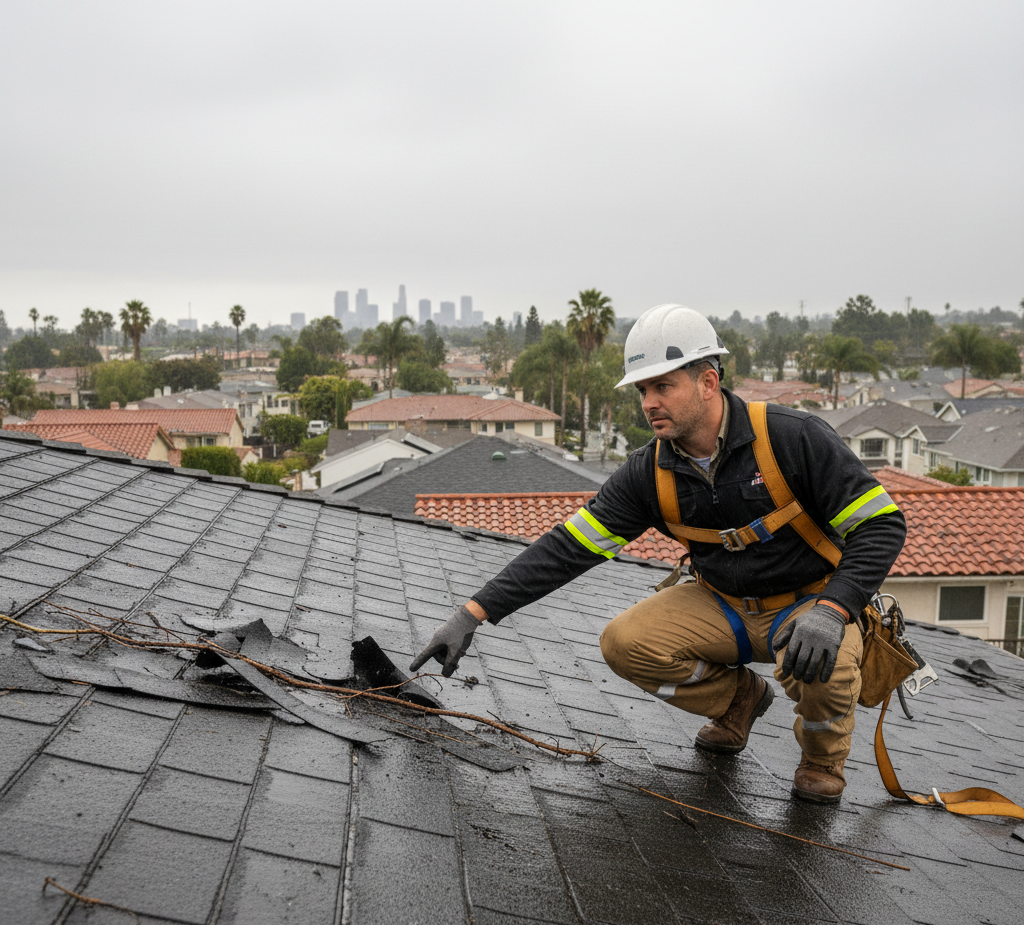
Storm damage roof repair in Los Angeles is more common than most homeowners expect. The city doesn’t get the kind of storms that flatten neighborhoods overnight – but the ones it does get are more than enough to cause serious roof damage across LA County.
The problem isn’t just the storm itself. It’s everything that happens in the 24 to 48 hours after – and most homeowners get it wrong. They wait too long, they don’t document properly, or they let an unlicensed contractor talk them into signing something before they’ve spoken to their insurer. This guide walks you through the right sequence of steps so you protect your home, your claim, and your wallet.
What Types of Storm Events Cause Roof Damage in Los Angeles
Not every storm looks dramatic. Some of the worst roof damage in LA happens during events that most people barely notice – a single night of heavy rain after months of dry weather, or a 45-mph wind gust during a Santa Ana event that only lasted a few hours.
Here’s what to watch for after these specific LA weather events –
- Santa Ana winds – These are the most common cause of sudden roof damage in Southern California. They can strip flashing, lift shingles at the corners, and dislodge ridge caps in a matter of minutes. If winds exceeded 40 mph in your area, get your roof inspected even if you don’t see obvious damage from the ground
- Heavy rain after dry periods – California’s clay and sandy soils expand and shift when rain hits after a long dry spell. This movement stresses existing roof structures, and any small crack or gap that was dormant suddenly becomes an active leak point
- Hail events – Less common in coastal LA but frequent in foothill communities like Pasadena, Altadena, and the Antelope Valley. Hail leaves circular bruising on shingles that’s invisible from the ground but causes granule loss and accelerated aging
- Wildfire debris and ash – Even if your home isn’t in a fire zone, ash and debris from nearby fires can accumulate on your roof, clog gutters, and create moisture trapping conditions that degrade roofing material over weeks
- Tree and branch impact – A single fallen branch doesn’t always look catastrophic – but the impact force can crack decking, shift flashing, and compress insulation underneath in ways that cause slow leaks weeks after the event
Do This First – Before You Call Anyone
The 30 minutes after you notice storm damage to your roof are the most important 30 minutes of the entire process. What you do – and don’t do – in this window directly affects your insurance outcome.
Follow this sequence exactly –
Step 1 – Stay off the roof Wet roofs are dangerous. Storm-damaged roofs are unpredictable. Even experienced roofers approach post-storm inspections with caution. Leave the exterior inspection to a professional.
Step 2 – Protect the interior immediately Move furniture, electronics, and valuables away from any area where water is entering or where the ceiling shows staining or sagging. Place buckets or containers to catch active drips. Put down towels or plastic sheeting to protect flooring.
Step 3 – Document everything – inside and out Take photos and video of every visible sign of damage. This includes ceiling stains, wet insulation in the attic, damaged shingles visible from a safe ground-level position, and any debris on the roof. Time-stamp your photos if possible – most smartphones do this automatically in the file metadata.
Step 4 – Check your policy before calling your insurer Know your deductible, your coverage type (ACV vs replacement cost value), and whether your policy has a separate wind or hail deductible. This takes ten minutes and changes how you approach the conversation with your adjuster.
Step 5 – Call a licensed roofing contractor for an inspection Get a professional damage report before filing your claim. Insurers take contractor-documented damage far more seriously than homeowner photos alone. Make sure the contractor is C-39 licensed in California – verify at cslb.ca.gov before they touch anything.
How to File a Storm Damage Roof Insurance Claim in California
Filing a roof claim in California is straightforward when you follow the right order. Where homeowners lose money is by rushing the process or missing documentation steps.
Here’s the correct sequence –
1. Get your contractor’s damage report first Before you contact your insurer, have a licensed roofer inspect the roof and give you a written assessment of the damage, estimated repair or replacement cost, and cause of damage. This document anchors your claim.
2. Contact your insurance company Call the claims line and report the damage. Give them the date of the storm event, a description of the damage, and let them know you have a contractor’s report available. Ask for your claim number immediately.
3. Prepare for the adjuster visit Your insurer will send an adjuster to inspect the property. Have your contractor’s report ready, your documentation photos ready, and ideally have your contractor present during the adjuster inspection. Adjusters work for the insurance company – your contractor works for you.
4. Review the settlement offer carefully Don’t accept the first offer without reviewing it against your contractor’s estimate. If there’s a significant gap, you have the right to dispute it. California homeowners also have the option to hire a public adjuster to negotiate on their behalf.
5. Complete temporary repairs to prevent further damage Most policies require you to take reasonable steps to prevent additional damage after a storm event. Professional tarping or temporary patching counts. Keep all receipts – these costs are often reimbursable under the claim.
According to the Insurance Information Institute, the most common reason storm damage claims are underpaid or denied is insufficient documentation at the time of filing. Getting a professional inspection report before filing is the single most effective step a homeowner can take.
What Storm Damage Roof Repair Costs in Los Angeles
Costs vary significantly depending on the severity of the damage and the roofing material involved. Here’s a realistic range for LA County –
| Damage Type | Estimated Cost Range |
|---|---|
| Minor shingle replacement after wind | $400 – $1,200 |
| Flashing repair after storm | $300 – $800 |
| Partial re-roof after hail damage | $4,000 – $9,000 |
| Full replacement after major storm | $11,000 – $28,000 |
| Emergency tarping (temporary) | $300 – $700 |
| Gutter repair or replacement | $500 – $2,500 |
If your damage qualifies for a full replacement and your policy covers replacement cost value rather than actual cash value – you could be looking at the insurer covering the majority of these costs after your deductible. That’s why documentation and the right contractor matter so much.
For context on how repair costs compare to replacement costs and how to decide which direction makes sense for your specific situation, our guide on roof repair vs replacement in Los Angeles breaks this down in full detail.
Watch Out for Storm Chasers in Los Angeles
After any significant storm event in LA County, unlicensed contractors show up – fast. They go door to door, often within hours of the storm, offering free inspections and quick sign-offs. Some are outright fraudulent. Others are legitimate contractors cutting corners to win volume business after a storm.
Here’s how to identify them –
- They show up unsolicited at your door immediately after the storm
- They pressure you to sign a contract or an Assignment of Benefits before you’ve spoken to your insurer
- They can’t provide a California C-39 license number on the spot
- They quote a suspiciously low price or promise to “handle everything” with your insurer without explaining the process
- They have no local address or verifiable business history in LA County
Always verify contractor license status at cslb.ca.gov and check reviews before signing anything. A reputable contractor will give you a written estimate, wait for your insurer’s assessment, and never pressure you into a same-day decision.
One LA-area contractor that handles storm damage inspections properly – with full C-39 licensing, written estimates, and complete insurance documentation support – is American Roofing CA. They serve homeowners across Los Angeles County and work directly with insurance adjusters when needed.
Does Homeowner Insurance Cover Storm Roof Damage in California
In most cases – yes. But the details matter.
Standard California homeowner policies typically cover sudden and accidental storm damage including wind, hail, falling trees, and rain that enters through storm-created openings. What they don’t cover is pre-existing deterioration, normal wear and aging, or damage that was present before the policy started.
A few things to understand about California specifically –
- Wildfire-adjacent policies – Some insurers in high fire risk areas have added exclusions or raised deductibles significantly in recent years. Read your policy carefully before assuming full coverage
- ACV vs RCV – Actual Cash Value policies pay the depreciated value of your roof at the time of damage. Replacement Cost Value policies pay what it actually costs to replace it today. The difference on a 15-year-old roof can be thousands of dollars
- Deductible types – Some policies have a separate wind or hail deductible expressed as a percentage of the insured value rather than a flat dollar amount. On a $600,000 home, a 1% wind deductible means $6,000 out of pocket before coverage kicks in
If you’re unsure whether your damage is covered, the California Department of Insurance consumer hotline at insurance.ca.gov provides free guidance for homeowners navigating storm damage claims.
Frequently Asked Questions – Storm Damage Roof Repair Los Angeles
1. How long do I have to file a storm damage claim in California?
Most California homeowner policies require you to report damage promptly – typically within one year of the event, though this varies by policy. Don’t wait. The longer you delay, the harder it becomes to prove the damage was storm-related rather than the result of deferred maintenance.
2. Will filing a roof insurance claim raise my premiums?
It can – but the impact depends on your insurer, your claims history, and the size of the claim. In California, a single weather-related claim generally has less impact on premiums than multiple claims within a short period. Speak to your agent before filing for smaller damage amounts where the repair cost is close to your deductible.
3. Can I get emergency roof repair on the same day in Los Angeles?
Yes. Licensed LA roofing contractors offer same-day emergency response for active leaks and storm damage. Temporary tarping can typically be deployed within a few hours of your call. For a detailed breakdown of the emergency repair process, read our guide on emergency roof repair in Los Angeles.
4. What if my insurer’s offer is lower than my contractor’s estimate?
You have options. You can submit your contractor’s estimate as a counteroffer with supporting documentation. You can hire a public adjuster to negotiate on your behalf. Or you can file a complaint with the California Department of Insurance if you believe the offer is unreasonable. Don’t accept a low settlement without at least requesting a re-inspection.
5. Do I need a permit for storm damage roof repair in Los Angeles?
Permits are required for full roof replacements in LA County and for repairs that exceed a certain scope. Your licensed contractor should handle permitting – if they suggest skipping it, that’s a red flag. Unpermitted work can create complications when you sell the home or file future insurance claims.
Los Angeles storms don’t follow a schedule – and roof damage rarely announces itself at a convenient time. The homeowners who come out of a storm event in the best position are the ones who document quickly, hire a licensed contractor before calling their insurer, and resist the pressure to sign anything in the first 24 hours. Take it one step at a time and the process is manageable.
Leave a Reply