
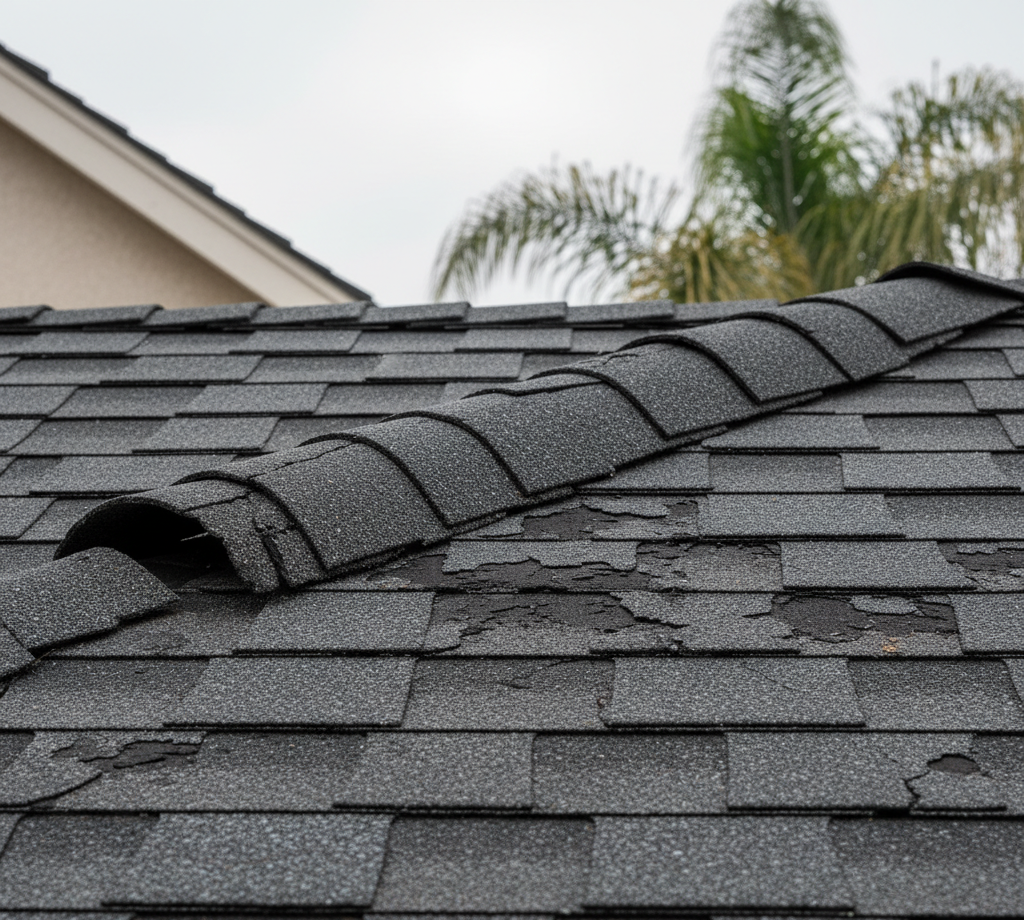
Most roofing problems in Los Angeles don’t announce themselves with a dramatic collapse or a waterfall coming through the ceiling. They start small – a stain here, a missing shingle there, a gutter that keeps filling with granules after every rain. The problem is that small signs have a way of becoming expensive problems very quickly, especially in a climate like Southern California where heat, UV exposure, and occasional heavy rain all work against your roof year round.
This guide covers the ten warning signs Los Angeles homeowners should never ignore – and what each one actually means for your roof.
1. Water Stains on Your Ceiling or Walls
This is the one most homeowners notice first – and unfortunately it means water has already been traveling through your roof structure for some time before it became visible inside your home.
A single water stain doesn’t always mean a catastrophic leak. But it does mean something has failed in your roof system – whether that’s a cracked shingle, failed flashing, or a compromised underlayment. The stain you see on the ceiling is almost always further from the actual entry point than it looks, because water travels along rafters and decking before it drips down.
What to do – Get a licensed roofer to inspect the roof and trace the source before the next rain event. Don’t wait until the stain grows.
2. Missing, Curling, or Cracked Shingles
Shingles that are visibly damaged from the ground are a clear sign your roof needs attention. In Los Angeles, the combination of intense UV exposure and occasional Santa Ana wind events accelerates shingle aging significantly compared to cooler climates.
Look for these specific signs –
- Curling at the edges – shingles that curl upward at the corners have lost their flexibility and are no longer sealing properly against the roof deck
- Cracking across the surface – surface cracks expose the underlayment beneath and allow moisture to enter during rain events
- Missing shingles entirely – even a single missing shingle creates an exposed section that can let water in during the next storm
- Shingles that look darker or discolored – this often indicates moisture absorption or algae growth underneath
A few damaged shingles in one area is typically a straightforward repair. Widespread damage across multiple sections usually points toward a more significant issue.
3. Granules in Your Gutters
If you clean your gutters and find them full of small sand-like granules that match the color of your shingles – that’s your roof telling you something important.
Asphalt shingles are coated with granules that protect the base material from UV damage. When those granules start shedding, the shingle underneath is exposed to direct sun and begins degrading much faster. In Los Angeles, where UV intensity is higher than most of the country, granule loss accelerates roof aging significantly.
A small amount of granule shedding in gutters is normal for new roofs in the first few months. On a roof that’s several years old, consistent granule accumulation in gutters after every rain is a warning sign worth acting on.
4. Sagging Sections on the Roof Surface
A sagging or dipping area anywhere on your roof surface is one of the most serious warning signs on this list. It almost always indicates structural damage – either to the decking underneath the shingles or to the rafters supporting the roof structure.
Sagging can develop from –
- Prolonged moisture exposure that has rotted the decking
- Weight from accumulated debris or water pooling
- Structural movement from earthquake activity – relevant for many LA homeowners
- Original construction issues that have worsened over time
This is not a repair you can defer. A sagging roof section that fails doesn’t give you much warning before it becomes a much larger and more dangerous problem.
5. Daylight Visible Through the Roof Boards
If you go into your attic during daylight hours and can see points of light coming through the roof boards – you have gaps in your roof structure that need immediate attention.
Light coming through means air and moisture can also come through. In Los Angeles, this is particularly problematic during the rainy season from November through April when even a small gap can allow significant water intrusion during a heavy rain event.
While you’re in the attic, also look for –
- Dark staining on the wood indicating past or current moisture
- Wet or compressed insulation
- Any areas where the decking feels soft when pressed
6. Flashing That Is Lifted, Cracked, or Missing
Flashing is the metal material installed around chimneys, skylights, vents, and roof edges to create a watertight seal at these vulnerable junction points. It’s one of the most common failure points on Los Angeles roofs – and one of the most frequently overlooked.
Signs of flashing problems include –
- Visible gaps between the flashing and the chimney or wall
- Rust or discoloration on metal flashing
- Flashing that has pulled away from the surface it was sealing
- Water stains directly below a chimney or skylight inside the home
Flashing repairs are among the most cost-effective fixes available when caught early. Left unaddressed, failed flashing leads to water entry that damages decking, insulation, and interior ceilings over time.
7. Moss, Algae, or Dark Streaking Across the Roof
In coastal and shaded areas of Los Angeles – parts of the Westside, hillside neighborhoods with tree cover, and areas near the beach – moss and algae growth on roof surfaces is more common than many homeowners realize.
Dark streaking across shingles is usually algae. Thick green or grey growth that feels soft is moss. Both are problems for different reasons –
- Algae feeds on the limestone filler in asphalt shingles, accelerating granule loss and surface degradation
- Moss holds moisture against the shingle surface and works its way under shingles at the edges, lifting them and creating entry points for water
Neither is an emergency on its own – but both indicate your roof surface is retaining moisture and should be inspected and treated before the problem spreads.
8. Spike in Energy Bills Without an Obvious Cause
This one surprises most homeowners. A roof that is failing – particularly one with compromised or compressed insulation due to moisture damage – loses its ability to regulate heat transfer into and out of the home.
In Los Angeles, where summer temperatures regularly exceed 90°F and air conditioning runs for months at a time, a compromised roof can add meaningfully to cooling costs. If your energy bills have climbed without a clear explanation and your roof is more than 15 years old – a roof inspection is worth adding to your checklist.
9. Your Roof Is Over 20 Years Old
Age alone isn’t a guarantee that your roof needs immediate repair or replacement – but it’s one of the most important factors in assessing roof condition in Los Angeles.
Asphalt shingles in Southern California typically reach end-of-life in the 18 to 22 year range due to intense UV exposure – shorter than the 25 to 30 year lifespan manufacturers quote for cooler climates. If your roof is approaching or past 20 years old and you haven’t had a professional inspection in the last two years, scheduling one now is the right call.
For a detailed breakdown of when repair makes more sense than full replacement, our guide on roof repair vs replacement in Los Angeles walks through the decision framework in full.
10. You Can’t Remember the Last Time Your Roof Was Inspected
This one doesn’t involve visible damage at all – but it belongs on this list. Most roofing problems in Los Angeles are caught and repaired inexpensively when they’re identified early. The ones that turn into five-figure replacements are almost always cases where warning signs were present for months or years before anyone looked.
The California Contractors State License Board recommends homeowners have their roofs inspected by a licensed C-39 contractor after any significant weather event and at least once every two to three years regardless. You can verify your contractor’s license before scheduling at cslb.ca.gov.
If you’ve noticed any of the signs above – or simply haven’t had an inspection in a while – getting ahead of the problem is almost always cheaper than reacting to it. One LA-area contractor offering free roof inspections across Los Angeles County is American Roofing CA – they provide written assessments with no obligation.
What to Do When You Spot These Warning Signs
Knowing the signs your roof needs repair in Los Angeles is only half the battle – acting on them quickly is what protects your home long term.
Seeing one or two of these signs doesn’t mean your roof is about to fail. But it does mean you shouldn’t wait another season before having someone take a proper look.
Here’s the right sequence –
- Document what you see – take photos from the ground of any visible damage before you call anyone
- Check your attic – look for staining, soft spots, or light coming through
- Call a licensed C-39 contractor – not a handyman, not an unlicensed contractor who showed up after a storm
- Get a written inspection report – this matters for insurance purposes if damage is storm-related
- Don’t defer small repairs – a $400 flashing repair today prevents a $4,000 decking repair next year
For context on what emergency repair situations look like and how to handle them, our guide on emergency roof repair in Los Angeles covers the full process.
According to the National Roofing Contractors Association, homeowners who schedule regular roof inspections spend significantly less on repairs over the lifetime of their roof compared to those who only call a contractor after visible damage appears.
Frequently Asked Questions – Roof Repair Warning Signs Los Angeles
1. How often should I have my roof inspected in Los Angeles?
At minimum, once every two to three years for a roof in good condition – and after any significant storm event regardless of visible damage. Older roofs or those with known problem areas should be inspected annually.
2. Can I inspect my own roof in Los Angeles?
You can check from the ground and from your attic – and both of those checks are worth doing. But walking on a roof without proper equipment and training is dangerous, and you’re unlikely to catch flashing failures, decking issues, or underlayment problems without professional experience. A licensed roofer sees things from the surface that aren’t visible any other way.
3. What is the most common roof problem in Los Angeles?
Flashing failure and shingle degradation from UV exposure are the two most frequently diagnosed issues on LA roofs. Both are highly repairable when caught early. Storm-related wind damage to shingles and ridge caps is also extremely common after Santa Ana events.
4. How much does a roof inspection cost in Los Angeles?
Many licensed LA roofing contractors offer free inspections, particularly for homeowners who are considering repair or replacement work. Paid inspections typically range from $150 to $350 depending on roof size and complexity. Always make sure the inspector is C-39 licensed before booking.
5. How do I know if my roof damage is covered by insurance?
Storm-related damage – wind, hail, falling trees – is typically covered under standard California homeowner policies. Age-related wear and gradual deterioration is not. A professional inspection report documenting the cause of damage is essential when filing a claim. Our full guide on storm damage roof repair and insurance claims in Los Angeles covers the claim process in detail.
Catching a roofing problem early in Los Angeles almost always means the difference between a manageable repair and a major replacement project. The signs are usually there – curling shingles, granules in the gutter, a stain on the ceiling that appeared after the last rain. The homeowners who act on those early signals consistently come out ahead. The ones who wait rarely do.
Leave a Reply