
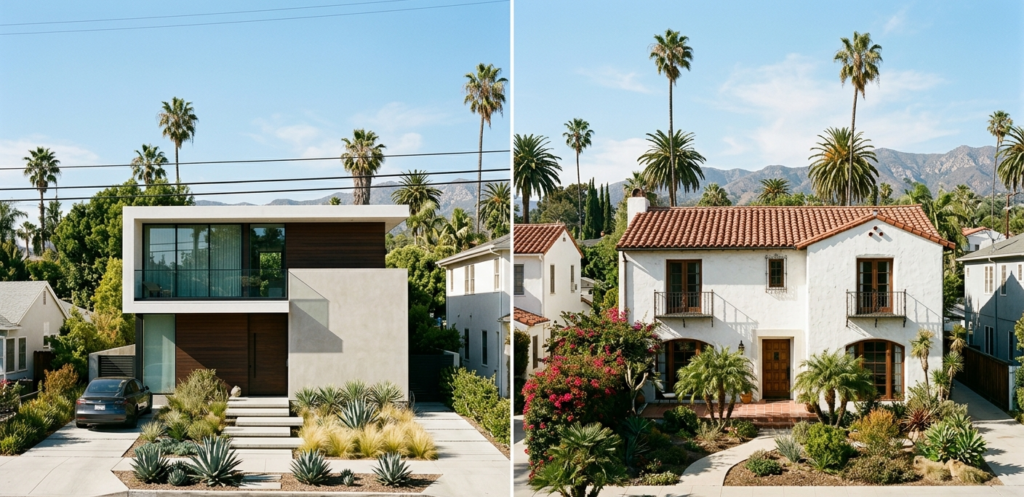
Flat roof vs pitched roof is one of those questions that sounds simple until you actually start looking into it. The answer depends on your property type, your neighborhood, your budget, and frankly, how long you plan to stay in the home. In Los Angeles, where you’ll find Spanish-style hillside homes with clay tile roofs sitting two blocks from flat-roofed commercial buildings and modern residential properties, both roof types are common – and both have legitimate advantages depending on the situation.
This guide breaks down the real differences between flat and pitched roofs in the context of LA’s specific climate, construction norms, and insurance environment – so you can make a decision that actually fits your property.
What Is a Flat Roof and What Is a Pitched Roof
Before comparing them, it’s worth being clear about what each term actually means – because there’s often confusion around flat roofs in particular.
A flat roof isn’t completely flat. It has a slight slope – usually between 1/4 and 1/2 inch per foot – just enough to allow water to drain toward a designated outlet. You’ll see flat roofs on apartment buildings, commercial properties, and an increasing number of modern residential homes across Los Angeles, particularly in areas like Silver Lake, Echo Park, and the Westside.
A pitched roof has a noticeable slope – typically anything above 3:12 pitch, meaning it rises 3 inches for every 12 inches of horizontal run. Pitched roofs are what most people picture when they think of a traditional house. In LA, you’ll see them everywhere from classic Craftsman bungalows in Pasadena to Spanish colonial homes in Los Feliz.
Both are legitimate roofing systems. The question is which one is the right fit for your specific situation.
Flat Roof – Pros and Cons for Los Angeles Homeowners
Flat roofs work very well in Los Angeles for specific property types and architectural styles. Here’s an honest look at both sides –
Advantages of flat roofs in LA –
- Lower upfront installation cost – flat roofs use less material and are faster to install than pitched roofs, which typically makes them 15 to 25 percent cheaper upfront
- Usable rooftop space – in dense LA neighborhoods where outdoor space is limited, a properly waterproofed flat roof can be converted into a rooftop deck, garden, or HVAC equipment platform
- Easier access for maintenance – HVAC systems, solar panels, and rooftop equipment are significantly easier to install and service on a flat surface
- Better suited for modern architecture – the clean horizontal lines of flat roofs complement contemporary and minimalist architectural styles that are popular in many LA neighborhoods
- Solar panel efficiency – panels can be angled at the optimal tilt on a flat roof rather than being fixed to the pitch angle of a sloped roof
Disadvantages of flat roofs in LA –
- Drainage is more critical – while LA doesn’t get constant rain, when it does rain it can be intense. Flat roofs rely entirely on proper drainage to prevent ponding water, which causes accelerated membrane deterioration
- Shorter lifespan – a well-maintained flat roof in Southern California typically lasts 15 to 25 years depending on the membrane type, compared to 25 to 50 years for a quality pitched roof
- More maintenance required – flat roofs need more frequent inspections and recoating to stay watertight, particularly after the rainy season
- Fire risk considerations – in areas with elevated wildfire risk, the roofing membrane used on flat roofs matters significantly from a fire rating perspective
Pitched Roof – Pros and Cons for Los Angeles Homeowners
Pitched roofs dominate residential construction across most of LA County, and for good reason. They perform reliably in Southern California’s climate over long periods of time.
Advantages of pitched roofs in LA –
- Natural water drainage – the slope does the work. Rain and debris move off the roof quickly, reducing the risk of water intrusion from pooling
- Longer lifespan – concrete tile and clay tile pitched roofs in Los Angeles regularly last 40 to 60 years with basic maintenance. Even quality asphalt shingle roofs run 18 to 22 years in the LA climate
- Better attic ventilation – the air space beneath a pitched roof allows for natural ventilation that keeps the home cooler in summer and reduces moisture buildup year-round
- Lower long-term maintenance – once a pitched roof is properly installed and in good condition, it requires significantly less ongoing maintenance than a flat roof
- Strong Class A fire ratings – concrete tile, clay tile, and metal pitched roofs all carry Class A fire ratings, which is increasingly important in many LA zip codes where insurers are scrutinizing roofing materials carefully
Disadvantages of pitched roofs in LA –
- Higher installation cost – more materials, more labor complexity, and longer installation time all contribute to higher upfront costs
- Less usable space – a pitched roof doesn’t offer any usable rooftop area
- Solar panel limitations – panel placement is fixed by the pitch angle and roof orientation, which isn’t always optimal for maximum energy production
- More complex repairs – working on a steep slope requires more safety equipment and expertise, which affects repair costs
Cost Comparison – Flat Roof vs Pitched Roof in Los Angeles 2026
Costs in LA County sit above national averages due to labor rates, permitting requirements, and material transportation. Here’s a realistic breakdown –
| Roof Type | Installation Cost Range | Lifespan | Annual Maintenance |
|---|---|---|---|
| Flat – TPO Membrane | $7,000 – $14,000 | 15–20 years | $300 – $600 |
| Flat – Modified Bitumen | $6,000 – $12,000 | 15–25 years | $400 – $700 |
| Pitched – Asphalt Shingle | $9,000 – $18,000 | 18–22 years | $200 – $400 |
| Pitched – Concrete Tile | $14,000 – $28,000 | 40–50 years | $150 – $300 |
| Pitched – Clay Tile | $18,000 – $35,000 | 50+ years | $100 – $250 |
| Pitched – Metal | $16,000 – $32,000 | 40–70 years | $100 – $200 |
When comparing costs, factor in the full ownership period rather than just the installation price. A concrete tile pitched roof that costs $20,000 today and lasts 50 years with minimal maintenance often works out cheaper over time than a flat roof that costs $10,000 but needs replacing every 18 to 20 years.
Which Roof Type Works Better in the Los Angeles Climate
Los Angeles has a climate that doesn’t fit neatly into most roofing manufacturer’s assumptions. The city sits in a Mediterranean climate zone with hot, dry summers, mild winters, and a defined rainy season from November through April. Here’s how each roof type responds to those conditions –
Heat performance – Both roof types can manage LA heat effectively when properly designed. Flat roofs with cool roof coatings and reflective membranes can actually outperform pitched roofs in reducing cooling costs. Pitched roofs with proper attic ventilation achieve similar results through airflow rather than reflection.
Rain performance – Pitched roofs have a clear advantage when it rains in Los Angeles. The slope moves water off immediately and consistently. Flat roofs depend entirely on drains being clear and functional – and after LA’s dry season, debris accumulation is a real issue that can cause drains to block during the first heavy rain event of the season.
Wind performance – During Santa Ana wind events, pitched roofs – particularly tile roofs – are more susceptible to shingle or tile displacement at ridges and edges. Flat roofs with properly sealed membrane edges perform well in high-wind conditions with less risk of material displacement.
Wildfire performance – For homes in high fire hazard severity zones across the LA hillsides and foothill communities, the roofing material matters more than the roof type. Both flat and pitched roofs can achieve Class A fire ratings with the right materials. Verify your material choice against your local fire hazard zone before making a decision.
Flat Roof vs Pitched Roof – Which Is Right for Your LA Property
Here’s a simple framework to help decide –
Choose a flat roof if –
- Your property is commercial, multi-unit residential, or a modern single-family home
- You want usable rooftop space for a deck, garden, or solar array
- Your architectural style is contemporary or minimalist
- Your budget is tighter upfront and you’re comfortable with more ongoing maintenance
- Your building structure or HOA restrictions make a pitched roof impractical
Choose a pitched roof if –
- Your home is a traditional residential property in a conventional neighborhood
- You want the lowest long-term maintenance burden
- You’re in a high fire hazard zone and want strong Class A material options
- You’re planning to stay in the home long term and want the best ROI over 30 to 50 years
- Your neighborhood has HOA guidelines that require a specific roof style or material
For a full breakdown of roofing material options for each roof type in California, our guide on best roofing materials for California weather covers everything you need to know before making a final material decision.
Permits and HOA Considerations in Los Angeles
Both flat and pitched roof projects in LA County require permits for full replacements and for repairs that exceed a defined scope. Unpermitted roofing work shows up on title reports and can create significant issues when you sell or file an insurance claim.
A few things to check before starting any roofing project in Los Angeles –
- LA County building permits – required for all full roof replacements and significant repairs. Your licensed contractor should pull these as a standard part of the job
- HOA guidelines – many LA communities, particularly in planned developments, gated communities, and historic districts, have restrictions on roofing materials, colors, and styles. Flat roofs in traditionally pitched-roof neighborhoods may face pushback
- Title 24 compliance – California’s energy code has specific requirements for roofing materials on replacement projects, particularly cool roof compliance on flat and low-slope roofs
- Fire hazard zone classification – check your property’s designation at the CAL FIRE website before finalizing your material choice
Always verify contractor license status at cslb.ca.gov regardless of which roof type you choose. A licensed C-39 contractor will navigate permitting requirements as part of the job scope.
What Happens When a Flat Roof or Pitched Roof Needs Emergency Repair
Both roof types can fail suddenly after a storm event, and the response process is similar regardless of roof type. Document the damage first, protect the interior, and get a licensed contractor on-site before contacting your insurer.
For active leaks or sudden storm damage on either roof type, our guide on emergency roof repair in Los Angeles walks through exactly what to do in the first 24 hours.
One LA-area contractor that handles both flat roof and pitched roof repairs and replacements across Los Angeles County is American Roofing CA – they offer free assessments and can advise on which system makes most sense for your specific property and neighborhood.
Frequently Asked Questions – Flat Roof vs Pitched Roof Los Angeles
1. Can I convert my flat roof to a pitched roof in Los Angeles?
Yes – but it’s a significant structural project, not a simple roofing job. Converting from flat to pitched requires new framing, which means structural engineering, building permits, and significantly higher costs. It’s worth exploring if you’re planning a major renovation, but not as a standalone roofing project.
2. How long does a flat roof last in Los Angeles?
A properly installed and maintained flat roof in LA typically lasts 15 to 25 years depending on the membrane type. TPO and modified bitumen membranes are the most common in Southern California. Regular inspections after each rainy season extend lifespan significantly.
3. Are flat roofs more likely to leak in Los Angeles?
Flat roofs carry a higher risk of water-related issues than pitched roofs – but not because of design flaws. The risk comes from drainage maintenance. If gutters and drains are kept clear and the membrane is inspected annually, flat roofs perform reliably even in LA’s rainy season.
4. Do insurance companies treat flat roofs differently in California?
Some insurers apply different terms to flat roofs, particularly regarding age-related depreciation and material type. In high fire hazard zones, the membrane material matters significantly. Always confirm coverage details with your insurer before undertaking a flat roof replacement. Our guide on storm damage roof repair and insurance claims explains the documentation process for both roof types.
5. Which roof type adds more value to a home in Los Angeles?
In most traditional LA residential neighborhoods, a quality pitched roof – particularly concrete or clay tile – adds more resale value than a flat roof. In modern architectural neighborhoods and for commercial properties, a well-maintained flat roof with rooftop amenities can be a genuine selling point. The neighborhood and buyer expectations matter as much as the roof type itself.
The flat vs pitched roof decision in Los Angeles comes down to your property type, your timeline, and your priorities. Neither is universally better – they’re designed for different situations. Get a licensed contractor to assess your specific structure before committing either way. The inspection is usually free, and the information is worth far more than the time it takes.
Leave a Reply