
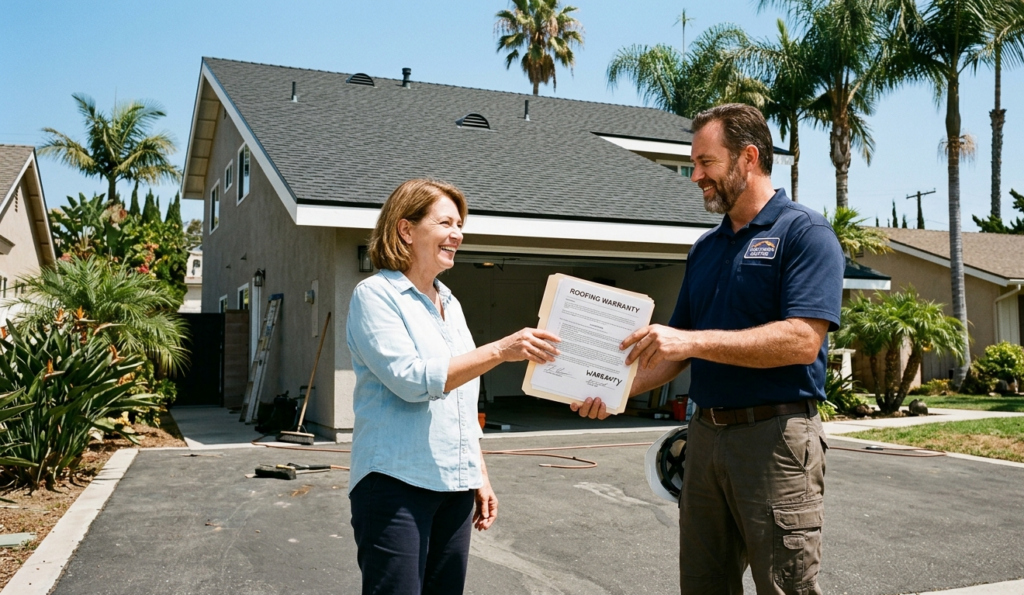
A roofing warranty sounds reassuring until you actually need to use it. That’s when most California homeowners discover that the coverage they assumed they had is either much narrower than expected, already voided by something they didn’t know about, or handled by a company that no longer exists.
This California roofing warranty guide breaks down how roofing warranties actually work in 2026 – the different types, what each one covers, how long they last, and what to watch out for before you sign a contract or accept a finished job.
The Two Main Types of Roofing Warranties
Every roofing project in California comes with the potential for two entirely separate warranty types – and understanding the difference between them matters more than most homeowners realize.
Manufacturer’s Warranty –
This warranty comes from the company that made the roofing material – the shingle manufacturer, the tile company, or the membrane producer. It covers defects in the material itself. If a shingle cracks prematurely due to a manufacturing flaw, the manufacturer’s warranty is what you’d file a claim against.
Manufacturer warranties in California typically range from 20 to 50 years for quality products. But here’s what most homeowners don’t read carefully – the coverage usually decreases significantly after the first 10 years. A 30-year shingle warranty might offer full replacement value for the first decade and then switch to prorated coverage that pays only a fraction of replacement cost as the roof ages.
Workmanship Warranty –
This warranty comes from your roofing contractor and covers the quality of the installation – not the material. If your roof leaks because of improper flashing installation, incorrect nail placement, or inadequate underlayment – the workmanship warranty is what covers that.
Workmanship warranties vary enormously by contractor. Budget operators might offer one year. Established licensed contractors typically offer five to ten years. Some premium contractors offer extended workmanship warranties as a differentiator.
This is the warranty that matters most in the first several years after installation – because installation errors cause far more early roof failures than material defects.
What a Manufacturer’s Warranty Covers – and What It Doesn’t
Most California homeowners assume a 30-year or 50-year manufacturer warranty means the roof is covered for three to five decades with no fine print. That assumption is almost always wrong.
Here’s what manufacturer warranties typically cover –
- Defects in the roofing material that cause premature failure under normal conditions
- Algae resistance – many warranties include coverage if algae growth degrades the material faster than specified
- Wind resistance – up to a specified wind speed, usually 60 to 130 mph depending on the product tier
- Color uniformity in some tile and shingle products
Here’s what manufacturer warranties typically don’t cover –
- Installation errors – if the contractor installed the material incorrectly, the manufacturer bears no responsibility. This is the most common reason warranty claims are denied
- Normal wear from California’s UV exposure – accelerated aging from intense UV isn’t always considered a defect. Read your policy carefully
- Damage from external events – storm damage, falling debris, foot traffic, and wildlife damage are almost universally excluded
- Improper maintenance – if you add rooftop equipment, paint the roof, or apply coatings not approved by the manufacturer, the warranty can be voided
- Contractor not registered with manufacturer – many manufacturers require installation by an approved or certified contractor to honor the full warranty. Using an uncertified installer can void coverage entirely
This last point is significant. Always confirm that your contractor is registered or certified with the manufacturer of the product they’re installing before work begins.
What a Workmanship Warranty Covers
A contractor’s workmanship warranty is your protection against installation-related failures – and in the first five years after a new roof, installation quality is the most common source of problems.
A solid workmanship warranty should cover –
- Leaks that develop due to improper installation technique
- Flashing failures at chimneys, vents, skylights, and walls
- Ridge cap installation errors
- Improper underlayment application
- Inadequate fastening that leads to shingle or tile displacement
What to watch for when reviewing a contractor’s workmanship warranty –
- Duration – anything under two years is a warning sign. Five years is standard for a reputable contractor. Ten years or more indicates strong confidence in installation quality
- Transferability – a warranty that transfers to the next owner when you sell adds genuine value to the home and is worth asking about
- Response time – does the warranty specify how quickly the contractor will respond to a warranty claim? Vague language here can mean months of waiting
- Business continuity – a one-person operation offering a ten-year workmanship warranty isn’t particularly meaningful if they go out of business in year three. Established companies with track records are far more likely to still be operating when you need them
Enhanced Manufacturer Warranties – Are They Worth It
Many roofing manufacturers offer tiered warranty programs – standard coverage at the base level and enhanced or “system” warranties at a higher tier, usually requiring installation by a certified contractor using approved accessories and underlayment.
In California, the most common enhanced warranty programs come from manufacturers like Owens Corning, GAF, CertainTeed, and Boral. These enhanced warranties typically offer –
- Extended coverage periods – sometimes up to 50 years non-prorated
- Coverage of both material and labor in some cases
- Wind resistance warranties at higher speeds
- Algae resistance coverage
- Transferability to new owners
The catch – enhanced warranties almost always require installation by a contractor who is certified or registered with that manufacturer. Not every licensed contractor qualifies. If enhanced manufacturer warranty coverage matters to you, ask the contractor directly whether they’re certified with the manufacturer of the product being installed before signing the contract.
California-Specific Warranty Considerations
California has some specific factors that affect roofing warranty coverage in ways that don’t apply in most other states –
- Title 24 compliance – if your roof replacement doesn’t meet California’s energy code requirements, it can create complications with both manufacturer and workmanship warranty claims. Make sure your contractor confirms Title 24 compliance before starting work
- Fire hazard zone materials – in high fire hazard severity zones across the LA hillsides and foothill communities, using non-approved materials voids both warranties and can affect your homeowner’s insurance. Verify material compliance for your specific zone before installation
- Seismic activity – standard roofing warranties don’t cover damage from earthquakes. Separate coverage through your homeowner’s policy is the route for earthquake-related roof damage
- Coastal salt air – in beachside communities from Malibu to Long Beach, salt air accelerates material degradation. Some manufacturers offer specific coastal warranties or product lines for these conditions – worth asking about if you’re within a few miles of the ocean
For a full breakdown of which roofing materials perform best under California’s specific climate conditions, our guide on best roofing materials for California weather covers each material type in detail.
How to Protect Your Roofing Warranty in California
Getting a warranty is one thing – keeping it valid is another. Here’s what California homeowners need to do to make sure their warranty coverage stays intact –
- Keep all documentation – your signed contract, the warranty certificate, the product specification sheets, and any photos taken during installation. Store digital copies somewhere permanent
- Schedule regular inspections – some manufacturer warranties require documented inspections at specific intervals to remain valid. Annual inspections by a licensed contractor fulfill this requirement and catch problems early
- Don’t add anything to the roof without approval – HVAC equipment, solar panels, satellite dishes, and rooftop decking all require penetrations that can void warranty coverage if not handled by an approved contractor using manufacturer-approved flashing and sealants
- Use approved contractors for any repairs – having an unapproved contractor repair a section of your roof can void the warranty on the entire roof in some cases. Always contact your original contractor or a manufacturer-certified contractor for repair work during the warranty period
- Document any weather events – after storms, photograph your roof from the ground and document the date. This protects you if you need to distinguish between warranty claims and insurance claims later
The National Roofing Contractors Association recommends homeowners request a copy of the completed warranty registration directly from the manufacturer after installation – don’t rely solely on the contractor to register on your behalf.
Questions to Ask Your Contractor Before Signing
Before you commit to any roofing contractor in Los Angeles or anywhere in California, get clear answers to these warranty-related questions –
- What is your workmanship warranty period and what exactly does it cover?
- Are you certified or registered with the manufacturer of the product you’re installing?
- Will you register the manufacturer warranty on my behalf and provide me with the certificate?
- Is your workmanship warranty transferable if I sell the home?
- What is your typical response time for a warranty claim?
- Do you carry liability insurance and workers’ compensation – and can I verify both?
A contractor who is reluctant to answer any of these questions clearly is a contractor worth walking away from. Always verify license status at cslb.ca.gov before signing anything.
One LA-area contractor that provides clear written workmanship warranties, works with certified manufacturer programs, and serves homeowners across Los Angeles County is American Roofing CA – they offer free assessments and will walk you through warranty documentation before work begins.
What to Do If Your Roof Warranty Claim Is Denied
Warranty claim denials are more common than most homeowners expect. If your claim is denied, here’s how to respond –
- Request the denial in writing – a verbal denial isn’t sufficient. Get the specific reason for denial documented
- Review the warranty language carefully – compare the denial reason against the actual warranty document. Contractors and manufacturers sometimes deny claims on grounds that aren’t actually supported by the warranty language
- Contact the manufacturer directly – if the contractor is dismissing a claim that falls under the manufacturer warranty, go directly to the manufacturer’s customer service line
- File a complaint with the CSLB – if you believe a licensed contractor is wrongfully refusing to honor a workmanship warranty, the California Contractors State License Board handles contractor disputes and has authority to investigate
- Consult a public adjuster – for large claims that involve both warranty and insurance components, a licensed public adjuster can help navigate the overlap
For storm-related damage that falls outside warranty coverage, our guide on storm damage roof repair and insurance claims in Los Angeles explains how to document and file a claim correctly.
Frequently Asked Questions – California Roofing Warranty
1. How long should a roofing warranty last in California?
A workmanship warranty from a reputable contractor should be at least five years – ten years is a sign of strong confidence in the installation. Manufacturer warranties on quality products range from 25 to 50 years, though coverage is typically prorated after the first ten to fifteen years. Anything under two years on workmanship is a red flag.
2. Does a roofing warranty transfer when I sell my home in California?
It depends entirely on the contractor and manufacturer. Some workmanship warranties are non-transferable. Many manufacturer warranties transfer once with a small administrative fee. Transferable warranties add real value to a home sale – always ask about this before choosing a contractor.
3. Can my roofing warranty be voided?
Yes – and more easily than most homeowners expect. Common reasons for voiding include using an uncertified installer, adding rooftop equipment without manufacturer-approved penetration methods, missing required inspection intervals, or having repairs done by an unapproved contractor. Read the warranty document carefully and keep it somewhere permanent.
4. What happens if my roofing contractor goes out of business?
The workmanship warranty becomes worthless – which is why contractor business history matters. The manufacturer warranty remains valid regardless of what happens to the contractor, assuming the product was registered correctly. This is another reason to register the manufacturer warranty directly with the manufacturer yourself rather than relying on the contractor.
5. Do I need a roofing warranty inspection in California?
Some enhanced manufacturer warranties require documented inspections at specified intervals to stay valid. Even where it’s not required, an annual inspection by a licensed roofer is the most cost-effective way to catch problems early and maintain documentation of roof condition – which matters for both warranty claims and insurance claims.
A roofing warranty is only as valuable as the contractor behind it and the documentation that supports it. In California, where the combination of UV exposure, wildfire risk, and coastal conditions creates more variables than most states, reading the fine print before signing matters more than anywhere else. Get everything in writing, register the manufacturer warranty yourself, and hold on to that paperwork for as long as you own the home.
Leave a Reply